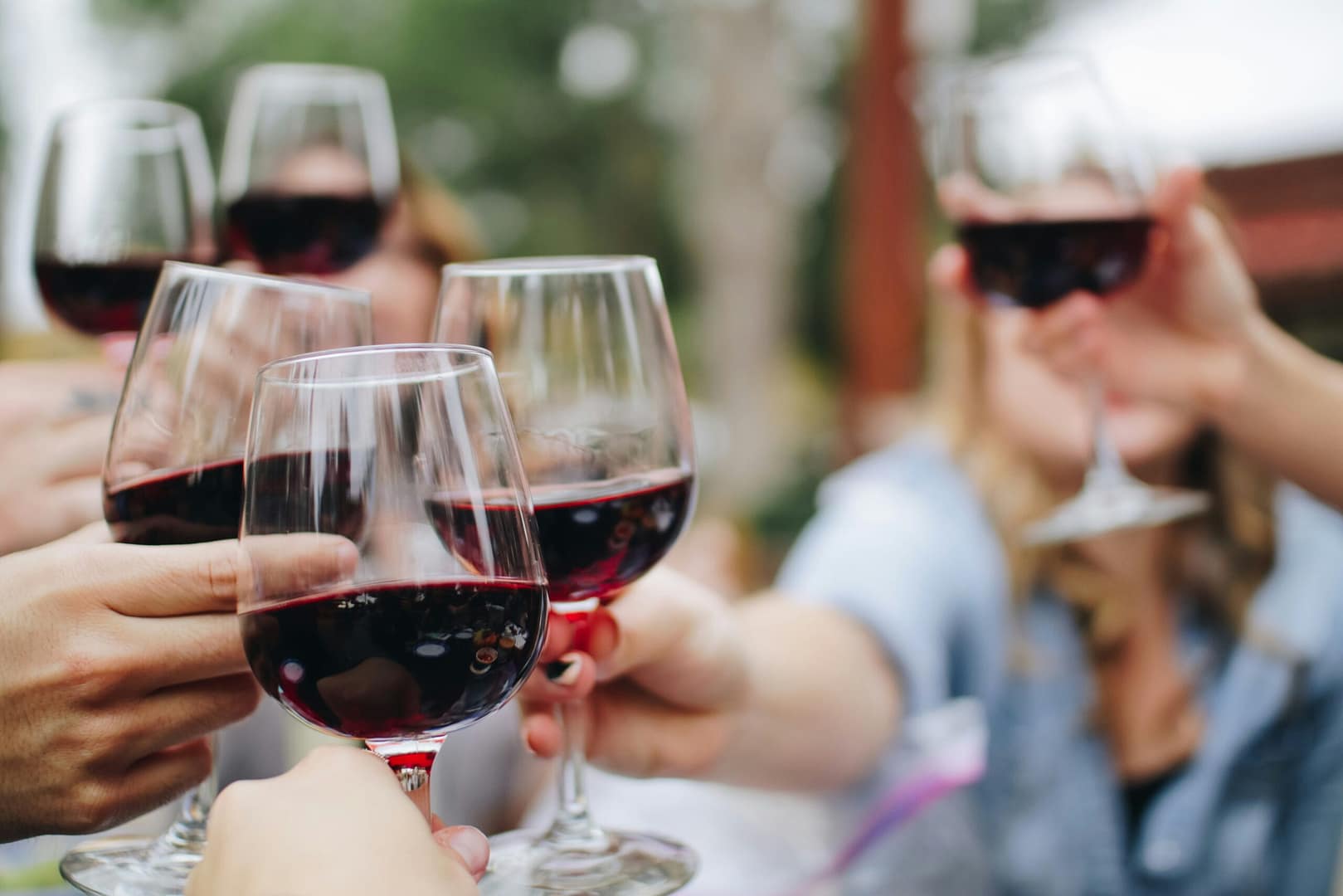
“Go, eat your bread with joy, and drink your wine with a merry heart, for God has already approved what you do.” — Ecclesiastes 9:7
There is something fitting about the name. A cloister, in its oldest sense, is a covered walkway enclosing a quiet courtyard — a place monks built not to escape the world but to inhabit it more intentionally. To read, to pray, to tend. The Cloister on Sea Island carries that spirit forward across the centuries, even draped in its grand resort hospitality, even with its salt air and Spanish moss and the Atlantic sighing just beyond the dunes.
Lisa and I arrived here for ten days, her annual illumiNations gathering drawing us south. If you haven’t encountered illumiNations before, it’s worth pausing on: a coalition of organizations and individuals who steward resources — time, treasure, relationships — toward one end: ensuring that every people group on earth has access to the Bible in their own heart language. The work is enormous, generational, and achingly beautiful. People gather in spaces like this each year to tend it.
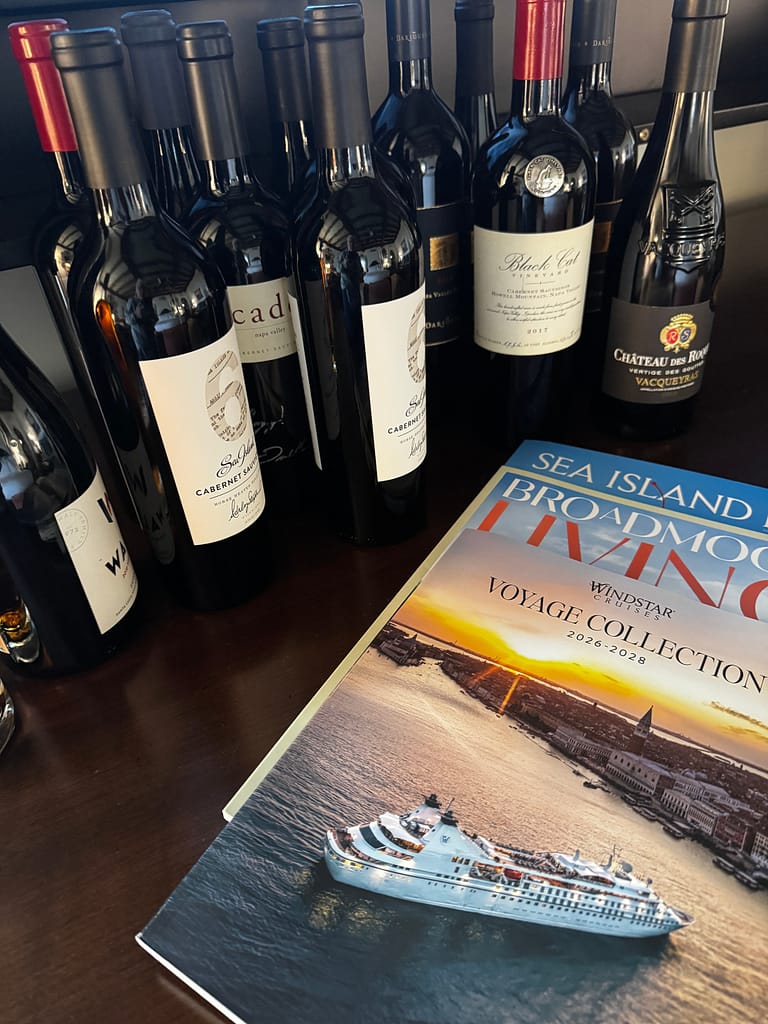
We packed for it accordingly — not just clothes and computers, but wine. When you know you’ll find quiet moments, you bring the bottles that reward them.
From our cellar in Williamsburg, we chose carefully. Cade, their Estate Cabernet from Howell Mountain — one of those Napa wines that feels more meditative than showy, all dark fruit and volcanic soil and patience. Hall winery’s ‘Kathryn’ Cab, which Lisa has a particular fondness for. Darioush — if you’ve ever held a bottle of their Signature Cabernet and wondered at the Persian architecture of that label, you already understand why it travels.
And then there is Black Cat. Some wines you discover and admire; others you discover and keep coming back to, and eventually you stop asking yourself why. Black Cat has become one of those for us — a Napa Cabernet that has earned a kind of quiet loyalty in our cellar and at our table. It doesn’t announce itself loudly. It doesn’t need to. There’s a confidence in it, a polish alongside its structure, that reminds you why you fell in love with Napa in the first place. We’ve opened enough Black Cat by now that when we’re deciding what to bring somewhere that matters, it makes the list without deliberation.
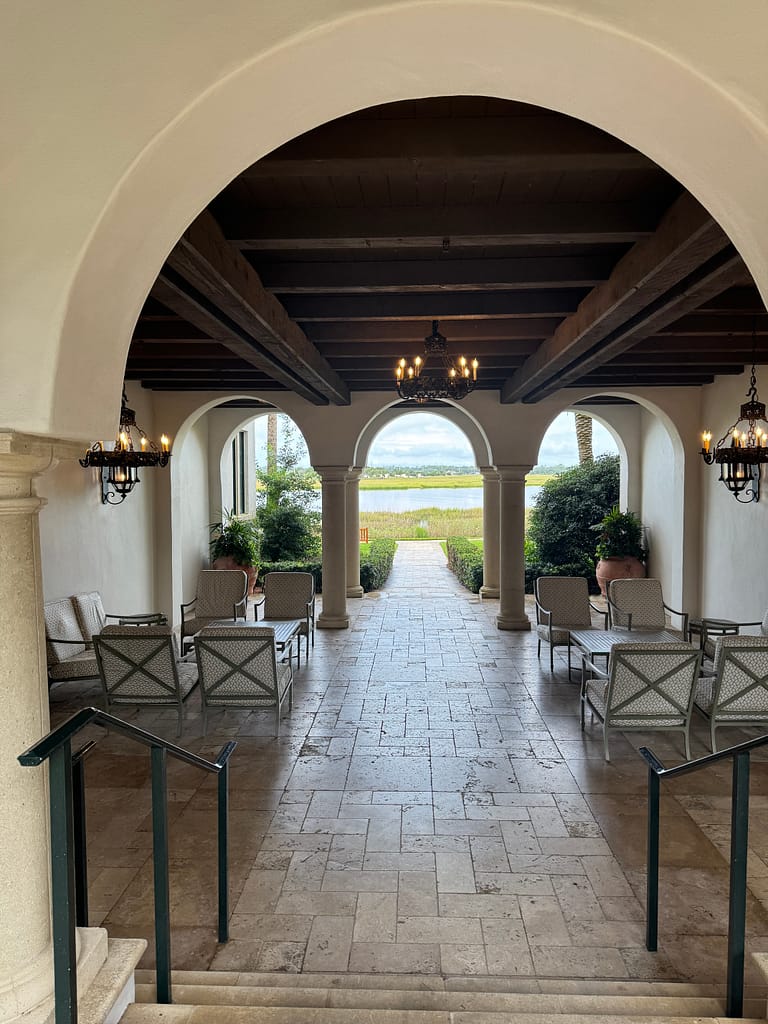
One bottle came with the longest story attached to it: a Vacqueyras we carried home from France a couple of years ago. Vacqueyras is that tucked-away appellation in the southern Rhône that tends to get overlooked by the Gigondas-seekers and the Châteauneuf devotees. But it is its own argument, and a persuasive one. Grenache-forward, with Syrah lending it spine and sometimes a brush of Mourvèdre in the depths — always that signature garrigue, the wild herbs and sun-baked stone that the southern Rhône seems to press into everything it grows. Ours was bought from a small, family owned winery near Avignon, the kind of purchase that only makes sense when you’re standing in it — when a bottle presents itself and something in you says, “This one.” We’ve been tending it in the cellar ever since, watching it find its way. A Vacqueyras of good breeding isn’t in a hurry; it wants a few years, wants to settle into itself, wants you to come to it on its own terms. We’ve been patient. And now, here: ten days at a place called The Cloister, among people who understand something about the importance of language. It felt like the right moment had finally arrived.
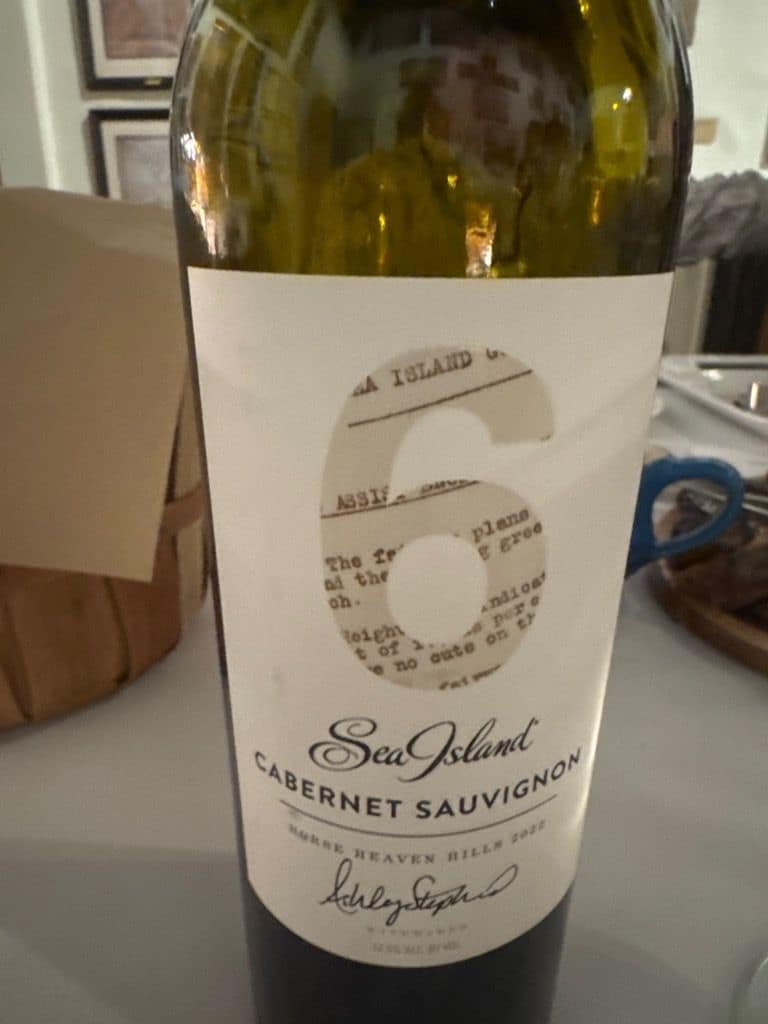
The hotel, for its part, offered us their own welcome. Two bottles of the Cloister’s private label Cabernet Sauvignon — sourced from Horse Heaven Hills, the AVA perched high above the Columbia River in Washington where the Yakima winds keep the vines in tension and the fruit is concentrated and serious. It was an unexpected grace note, the kind of hospitality that doesn’t announce itself but simply appears: here, you are known and we are glad you’ve come.
We haven’t opened everything yet. That’s by design. The bottles will find their moments — a dinner that runs long, an evening on the terrace when the conversation turns from the work to the people doing it, a late night with friends who’ve become more than colleagues over years of this shared purpose. Wine, after all, is most itself when it’s shared in unhurried company. You don’t uncork a Darioush alone and in a hurry. You wait for the right people to come around.
There’s a thread, I keep noticing, between what Lisa’s colleagues are doing and what happens when you open a bottle around a table of friends. Translation — real translation, the kind that costs years and requires deep love of a people and their language — is the act of carrying meaning across a distance without losing it. A sentence in Greek doesn’t simply become a sentence in Hmong or Navajo or Swahili; it has to be understood, felt, believed in the new tongue as it was in the original. Something living crosses a border.
And wine? Wine is the record of a place — its soil, its weather, its particular angle of light, the hands that tended it. When a Vacqueyras from the southern Rhône travels to Sea Island, Georgia — when it has waited two years in a Williamsburg cellar for exactly this gathering — something of that garrigue and that limestone crosses a border too. You taste it and for a moment the distance collapses.
Drink your wine with a merry heart. The Preacher of Ecclesiastes wasn’t recommending escapism. He was insisting on presence — on receiving the gifts of the moment as gifts, not accidents. There is a difference between people who drink wine and people who let it mean something. We are trying, Lisa and I, to be the second kind.
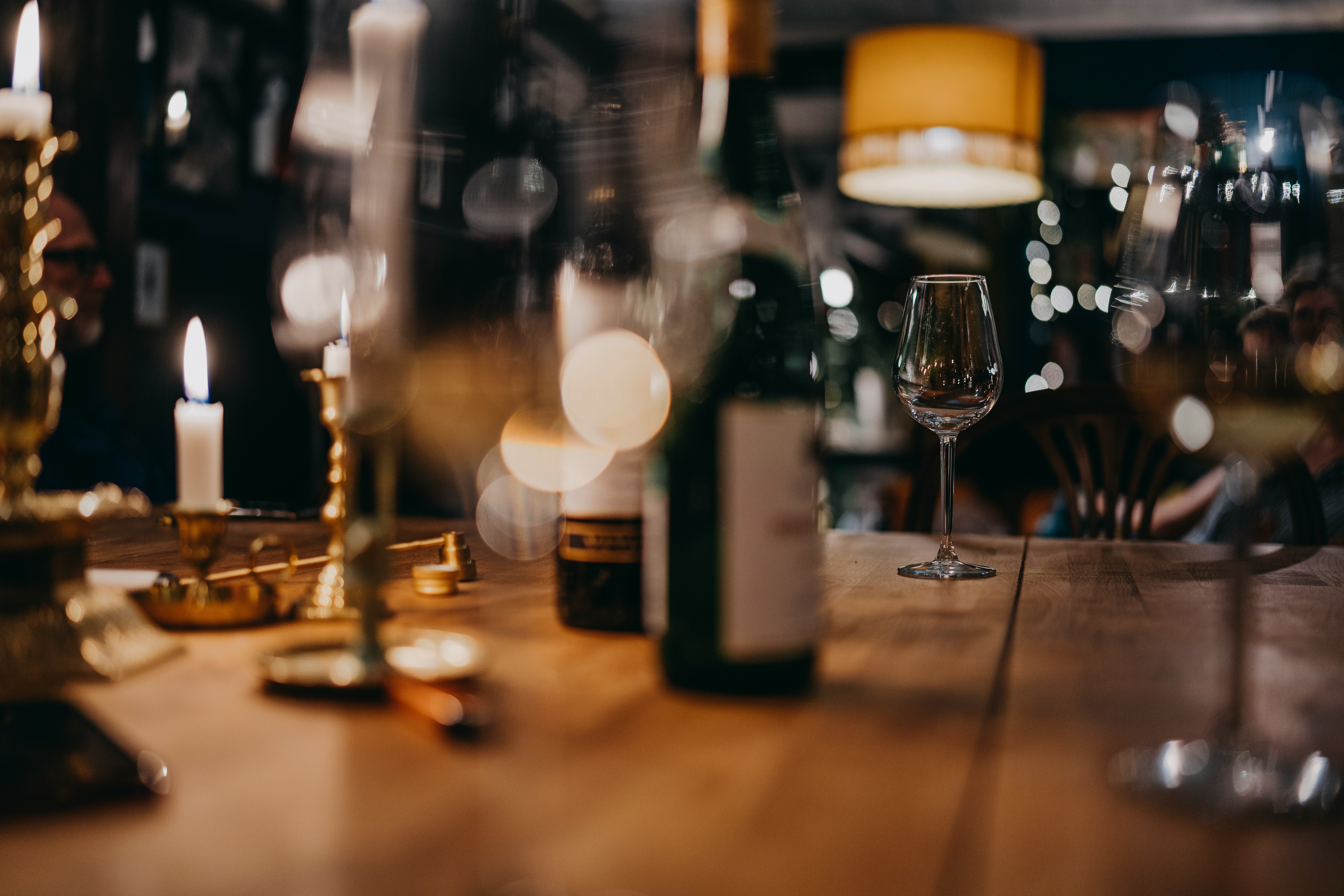
The Cloister will offer its breezes and its beauty and its gracious bottles from Horse Heaven Hills. We’ll add ours from Napa and the Rhône and this particular Virginia cellar where we’ve been slowly, joyfully building something we didn’t know we needed until we did.
And somewhere in between the sessions and the sessions, the work and the rest, we’ll find the right evening to open the Vacqueyras. I suspect we’ll know it when it arrives.
Discover more from Bottle Musings
Subscribe to get the latest posts sent to your email.