Tignanello: A Super Tuscan Worthy of Celebration

There are wines you admire.

There are wines you collect.

And then there are wines you celebrate life with.

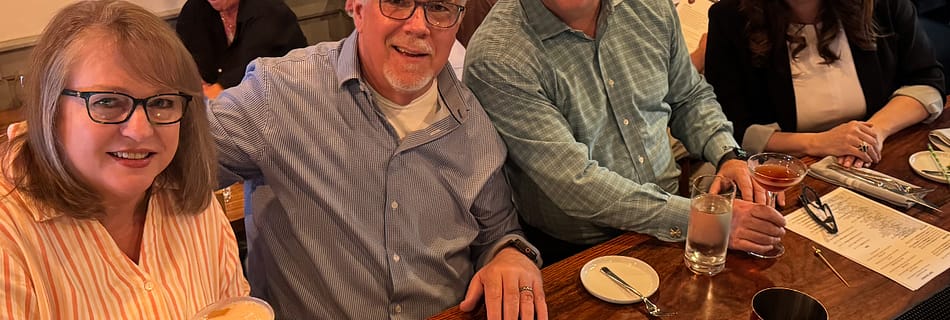
For Lisa’s birthday the last couple of years, we’ve slipped into a booth at Dallas’ Il Bracco, ordered something beautifully simple—often steak, sometimes pasta—and asked for a bottle of Tignanello.

It has become our tradition.

And traditions, like great wines, deepen with time.

A Wine That Changed Italy

To understand Tignanello is to understand quiet rebellion.

In the early 1970s, when Chianti was bound by rigid rules—white grapes required in the blend, aging protocols fixed in stone—the Antinori family decided to take a risk. They removed the white grapes. They introduced Cabernet Sauvignon. They aged the wine in small French oak barrels.

The result was revolutionary.

Tignanello became one of the first “Super Tuscans”—wines that didn’t fit within Italy’s classification system but far exceeded its expectations. It wasn’t merely different. It was better.

Today, the blend—primarily Sangiovese with Cabernet Sauvignon and a touch of Cabernet Franc—delivers that unmistakable harmony:

Bright Tuscan acidity Dark cherry and plum depth Tobacco, leather, and cedar A structure that ages gracefully yet drinks beautifully with a good steak

Every bottle feels like both heritage and innovation in conversation.

Visiting Antinori: Where History Meets Modern Vision

A few years ago, we stood on the rolling hills of Tuscany at the breathtaking Marchesi Antinori estate—Antinori nel Chianti Classico.

The winery itself is an architectural marvel—buried into the hillside, sweeping terraces overlooking vines that have seen centuries of harvests. It feels both ancient and futuristic, as though the family understood that legacy must be preserved—but also propelled forward.

The Antinori family has been making wine for more than 600 years. Twenty-six generations. Few family enterprises on earth can claim that kind of continuity.

And yet, what struck me most was not simply the history.

It was the leadership.

The Strength of Female Leadership

Today, the Antinori legacy is stewarded by the three Antinori sisters—Albiera, Allegra, and Alessia—who serve in key leadership roles within the company. Under their guidance, the estate has not only preserved its reputation but expanded its global influence.

In an industry long dominated by men, the Antinori sisters represent something powerful: continuity without stagnation, tradition without rigidity.

Albiera Antinori, in particular, has played a prominent leadership role as president of the company. Their leadership is marked not by flashy reinvention, but by thoughtful evolution. They have balanced respect for terroir with modern excellence, expanded global distribution without diluting identity, and maintained quality across a portfolio that spans continents.

The result? Tignanello remains unmistakably Tuscan—yet globally revered.

That balance requires both courage and restraint.

Birthday Dinners and the Beauty of Consistency

Back at Il Bracco in Dallas, as the hum of the restaurant swells around us, I always notice how Tignanello opens in the glass. It doesn’t shout. It unfolds.

First the fruit.

Then the spice.

Then the earthy whisper of Tuscany itself.

It pairs with conversation. With laughter. With reflection on another year well lived.

There is something fitting about celebrating Lisa—a woman of extraordinary creativity and strength—with a wine that carries forward a legacy shaped so profoundly by capable women.

Tignanello is not trendy. It is timeless.

It is not flashy. It is confident.

It does not beg for attention. It earns it.

Why Tignanello Endures

Some wines rise and fall with fashion.

Tignanello endures because it stands at the intersection of:

Innovation and heritage Power and elegance Structure and soul

And perhaps that is why it has become part of our birthday ritual.

Because certain wines do more than taste good.

They mark time.

They anchor memory.

They remind us that the best things in life—like love, like legacy—are crafted carefully and improved patiently.

If you haven’t opened a bottle of Tignanello recently, find an excuse.

Or better yet—create one.

And when you do, raise a glass to Tuscany, to the Antinori sisters, and to the kind of leadership that honors the past while boldly shaping the future.

Salute. 🍷

Raising the Bar in the Lone Star State

Why Texas Wine—and Benjamin Calais—Deserve a Second Look

I’ve been fortunate to taste wine in some of the great regions of the world. From the Rhône to Barolo, from Paso Robles to Hunter Valley, I’ve stood in cellars old and new, listened to growers talk about soils and seasons, and learned to appreciate how deeply wine is shaped by place, patience, and people.

And yet—despite all those miles and all those bottles—I remain unapologetically Texan.

Texas is home. It formed my palate long before I knew what tannin management or whole-cluster fermentation meant. I love this state—the scale of it, the confidence of it, the stubborn refusal to be dismissed. That love extends naturally to Texas wine, even when the rest of the world hasn’t quite caught up.

Which is why the work of Benjamin Calais matters so much.

Benjamin Calais didn’t come to Texas to imitate France. He came to raise expectations.

A French-born winemaker who found his professional home in the Texas Hill Country, Ben brings Old World discipline to New World possibility. At CALAIS winery, he has become one of the clearest examples of what Texas wine can be when ambition is matched with integrity. His commitment to working with 100% Texas-grown fruit, to vineyard relationships, to thoughtful yields and careful élevage, is not marketing—it’s conviction.

These are wines made with intention. They’re not trying to shout over Napa or cosplay Bordeaux. They’re saying, calmly and confidently: Pay attention.

What I admire most is that Ben doesn’t cut corners in order to win arguments. He raises the bar instead. Native fermentations when appropriate. French oak used judiciously. Gravity flow rather than pumps. Wines that respect texture, structure, and balance rather than sheer extraction. This is craftsmanship that assumes the drinker is paying attention.

Through French Connection Wines, that same philosophy finds a complementary expression—particularly with Rhône varieties that make remarkable sense in the Texas climate. These wines don’t apologize for where they’re from. They lean into it.

And here’s the quiet truth: Texas wine no longer deserves to be judged by its outliers.

Yes, this is a young industry. Yes, the climate is challenging. But those challenges are not unlike what the Rhône, southern Italy, or Australia have faced—and overcome—through careful matching of site, variety, and technique. The best Texas producers today are not experimenting blindly; they are learning deliberately.

Benjamin Calais is among those leading that learning curve.

For those who dismiss Texas wine out of hand, I’d offer a gentle challenge: taste again. Taste thoughtfully. Taste what’s being made now by people who respect both tradition and terroir. You may not find replicas of Europe—but you’ll find wines with honesty, character, and increasing precision.

As someone who loves great wine wherever it’s grown, and who carries Texas with me wherever I go, I find that deeply encouraging.

Texas doesn’t need to prove it can be something else.

It just needs to keep becoming itself.

And thanks to winemakers like Benjamin Calais, that future is already in the glass. 🍷

The Pope’s New Castle and the Old Art of Friendship

There are wines you analyze—and wines you enter.

Châteauneuf-du-Pape has always belonged to the second category for me. Not because it demands reverence, but because it invites memory.

The story begins in the early 14th century, when the papacy relocated from Rome to Avignon. Pope John XXII looked across the Rhône Valley and saw a sun-washed rise of stones and wind. He built a castle there—the Pope’s New Castle—but more importantly, he cultivated a vision. He encouraged vineyards, regulated production, and treated wine not as excess, but as something worthy of discipline and care. Ordered joy. Stewardship before the word became fashionable.

The vineyards themselves still preach the sermon. Those famous galets roulés—the smooth, round stones scattered across the ground—absorb heat during the day and release it at night, quietly tending the vines while the world sleeps. Grenache thrives here, supported by Mourvèdre’s gravity and Syrah’s lift. Thirteen permitted varieties, not to encourage chaos, but harmony. Different voices. One place.

Centuries later, after wars and phylloxera nearly erased it all, Châteauneuf-du-Pape became one of France’s first AOCs. Boundaries drawn. Yields limited. Alcohol minimums enforced. A declaration that place matters, and that restraint is not the enemy of beauty.

Even the bottle carries a reminder—the papal crest embossed in glass. Not marketing, but accountability. This wine answers to something higher than trend.

And yet, for all its history, Châteauneuf never feels complete when it’s discussed in isolation.

Because wine—real wine—doesn’t reach its purpose until it’s shared.

I’ve found that the best bottles don’t dominate a table; they pace it. They slow conversation just enough. They invite listening. They create a rhythm where stories surface naturally—about children and work and loss and gratitude. No one leads with tasting notes. Someone eventually lifts a glass and says, “This is really good,” but what they mean is this moment.

Wine has always understood something we often forget: presence matters. It resists hurry. It asks us to sit, to look up, to pass the bottle and ask, “More?”—and to mean it in more than one way.

It’s no accident that the most sacred meal in Christian memory wasn’t built around spectacle, but a table. Bread broken. A cup shared. Friendship sealed not by perfection, but proximity.

Wine doesn’t create friendship—but it creates space for it. Space where laughter grows warmer, silence grows meaningful, and time loosens its grip.

So when I open a bottle of Châteauneuf-du-Pape with friends, I’m not just drinking something shaped by stones, sun, and centuries. I’m participating in one of humanity’s oldest rituals:

Come, sit with me. Let’s remember who we are together.

That, in the end, may be the truest tasting note of all. 🍷

“Beauty awakens the soul to act.” – Dante Alighieri

Prologue: The Sun Rises over Alta Langa

As dawn painted the sky in hues of rose and gold, we awoke in the embrace of Villa Alta Langa. The promise of a day in Barolo, a realm synonymous with sublime wines and rolling vineyards, lay ahead. The air was thick with anticipation, and the echoes of dreams from the night lingered as we embarked on a journey through the storied landscapes of Langhe.

Act I: G.D. Vajra – Where Elegance Meets Expression

Arriving at G.D. Vajra, the winery’s name echoed like a lyrical sonnet, resonating with a history woven into the very fabric of Barolo. Our guide for the day, Natascia, embodied the charm and hospitality for which this region is renowned. She led us through the labyrinth of barrels, vines, and the heart of the winemaking process with an infectious enthusiasm that only intensified with each step.

Natascia explaining the Vajra philosophy

Aldo and Milena Vaira, the custodians of this vinous haven, welcomed us with a warmth that transcended the traditional roles of host and guest. The vineyards, meticulously cared for and caressed by the Piedmontese sun, seemed to whisper secrets to those willing to listen.

Intermezzo: Natascia’s Ode to Beauty

Natascia’s voice, both passionate and melodic, echoed through the caverns of barrels as she spoke of beauty in all its forms. In times that tested the human spirit, she articulated a sentiment that resonated deeply—a belief in the transformative power of art, poetry, music, literature, and wine. In the cellars of G.D. Vajra, these weren’t just commodities; they were vessels of solace, conduits to a higher plane of existence.

“Art,” she declared, “is the soul’s rebellion against the harshness of reality.” In poetry, she found verses that could mend the wounds of the world. Music, she proclaimed, was the universal language that transcended borders and healed divides. Literature, in her eyes, was a refuge, a place where the weary could find solace. And wine, oh, wine was the elixir that united them all—a nectar that elevated the human experience.

Act II: Tasting Elegance in Every Sip

The tasting room at G.D. Vajra unfolded like a gallery of sensory delights. Glasses clinked like brushes on a palette as we delved into the repertoire of their wines. The Barolo, a symphony of Nebbiolo, danced on the palate with notes of red berries and delicate floral undertones. The Langhe Nebbiolo showcased the variety’s versatility, offering a youthful exuberance with a promise of aging gracefully.

A delightful lineup

As Natascia guided us through each pour, her words were not just descriptors; they were verses in a wine-infused epic. The wines, like well-composed symphonies, unfolded in movements, revealing layers of complexity and grace.

Epilogue: A Tapestry Woven in Barolo

As the day in Barolo drew to a close, the sun dipped below the hills, casting a warm glow over the vines. Aldo and Milena bid us farewell, their smiles etched with the satisfaction of sharing their labor of love. Natascia’s parting words lingered in the air like a benediction—a reminder that in the communion of art, poetry, music, literature, and wine, we find not just pleasure but a balm for the soul.

In the golden twilight, we reflected on the day—an odyssey of the senses, a symposium of the soul. G.D. Vajra had not merely poured wines; they had shared a narrative, a glimpse into the essence of Barolo and the enduring spirit of the Langhe. Each bottle was a brushstroke in the ever-evolving canvas of this enological masterpiece.

As we left the vineyards behind, the echo of Natascia’s words lingered—the idea that in embracing beauty, in all its myriad forms, we find not just an escape but a source of strength. Barolo, with its wines and the embrace of G.D. Vajra, had become a testament to the resilience of the human spirit, a celebration of the profound beauty that could be found even in the midst of adversity.

Brich Monviso keeping watch over Piemonte

“Oh the places you’ll go ….” -Dr. Seuss

Our epicurean ensemble, spirits high and palates primed, we bade farewell to the romantic realms of Valpolicella, a veritable garden where Bacchus himself would have reveled in ruby red rapture. Our compass pivoted east, and the lure of Piedmont’s liquid treasures steered us through the undulating embrace of Northern Italy’s winelands.

Descending from the autostrade at Asti, we entered Barbera’s dominion, the vineyards unfurling like green and gold scrolls penned by the gods of the vine. Our destination was the idyllic Villa Alta Langa in Cravanzana, a name that rolls off the tongue as smoothly as the wines it promised.

Villa Alta Langa

The Welcome: A Warm Embrace by Villa Alta Langa

Our arrival at Villa Alta Langa was an affair of familial warmth. Hugo and Pietra, custodians of this rural repose, greeted us not as guests but as kin returned from afar. A lunch of Piedmontese splendor awaited, where simple ingredients spoke of the land’s fecundity, each flavor a narrative of nurture.

In the Kitchen with Hugo

The Truffle’s Allure

The highlight of the evening was a feast under the firmament, a starlit symphony of tastes and tales. Truffles, Piedmont’s black diamonds, freshly harvested by a neighbor of our hosts, were shaved with a ceremonial reverence over dishes that would haunt our memories forever. The farmer who generously provided the coveted fresh truffles, a man whose very hands told of toil and terroir, joined us, bridging the gap between earth and table with his prized fungi.

The Wines: Ambassadors of Piedmont

The wines, ah, the wines. As the evening progressed, we poured the essence of Piedmont into our glasses. The Barolo, with its garnet glow, brought forth a historical tapestry, each sip a thread connecting past and present. The Dolcetto, a touch more demure, whispered of fog-laden mornings and the sweet ache of anticipation.

The conversation, lubricated by these vinous voices, danced across subjects as diverse as the wines themselves. From the nebbiolo’s nuanced tales to the Dolcetto’s jovial jests, we traversed the spectrum of Piedmont’s enological expressions.

As the night waned, we plotted our forthcoming days. Piedmont promised more than just gustatory delights; it was a living museum of viticulture, each winery a gallery, each vintage a masterpiece waiting to be discovered.

We would wander through cellars where the patina of age hung as thick as the aroma of oak, visit estates where innovation walked hand-in-hand with tradition, and perhaps most enchantingly, meet the vintners—the true artists of the soil.

Conclusion: Piedmont’s Ode to Joy

Our initial foray into Piedmont’s vinous verse was merely the prelude to what we knew would be an odyssey of senses. We looked forward to days filled with the discovery of the deeper secrets of these incredible varietals.

We retired to our rooms, heads spinning not from the wine but from the intoxicating prospect of the days ahead. In Piedmont, every hillside seemed to hold a secret, every vine a story, and every glass poured promised a journey not just across palates but through time and tradition.

As I closed my eyes, it was with the knowledge that we were not merely traveling through Piedmont—we were immersing ourselves in a region where the wine is the ink with which its story is written, an epic still unfolding with each vintage, every glass, a new chapter in Italy’s enduring love affair with the vine.


“Once upon a time, the planets and the fates and all the stars aligned. You and I ended up in the same room at the same time.” – Taylor Swift

Nestled upon the idyllic hills above the ancient city of Verona, with the first light of dawn playing upon the verdant vineyards, the Agriturismo San Mattia offered more than rest; it promised a day of vinous exploration and serendipitous encounters. It was here, after a decade, that we found ourselves returning to the heart of Valpolicella, a pilgrimage to the cherished winery of Roberto Mazzi e figlia—a symbol of tradition’s endurance and innovation’s courage.

A Decade Later: The Mazzi Revisit

Stepping onto the sacred soils of the Mazzi winery, we were greeted by the familiar yet evolving landscape. Each vine spoke of history, each barrel whispered of the future. The winery had transformed, yet its soul remained unaltered—dedicated to crafting wines that honored the legacy of Valpolicella while embracing the winds of change.

Discussing the finer points with Antonio Mazzi

As we delved into the depths of the wine cellar, the air thick with the scent of oak and fermenting grape, it was akin to stepping into a living canvas, each stroke of the winemaker’s craft a fusion of hues from the palettes of Botticelli and Da Vinci, immortalizing the spirit of Italy with every bottle.

In the Mazzi cellar ten years later

Encounters of the Heart

Amid the barrels full of the promise of new wine, under the arched cellar ceiling, we encountered camaraderie in the form of kindred spirits—two Italian couples, their laughter a symphony, their presence a reminder of Fellini’s joyous cinematography. With them, we shared tales and glasses, each sip an unspoken dialogue, each glance an exchange of silent poetry, reminiscent of the tender verses born of the Renaissance.

Our narrative was further enriched as young American service members, stationed in nearby Vicenze and seeking respite in the arms of Valpolicella, joined our ensemble. Their stories, vibrant and bold as the wines we tasted, were ballads of their own, echoing the adventurous prose of Ernest Hemingway and the raw and vulnerable melodies of Bruce Springsteen, all the while in the hallowed halls of the winery, where the past meets the present.

A Bardolino Interlude

With the sun at its zenith, we bade our new friends farewell, promised Antonio Mazzi we’d see him again in no more than another ten years, and continued our journey to Bardolino.

Lake Garda

Here, by the serene expanse of Lake Garda, we indulged in a luncheon in a pizzeria by the shore, our table graced with the earthy delight of artisanal pizzas, each slice a testament to the culinary artistry of Italy, and served by a young Italian man whose last words as we left were “Don’t mess with Texas!” Yet, as clouds gathered, we retreated not with disappointment but with a crescendo of anticipation, for the wine library of San Mattia awaited our return—a bibliotheca of bottled tales, a sanctuary of shared histories.

San Mattia’s Wine Library: An Ode to Evenings Past

Within the hushed walls of San Mattia’s wine library, surrounded by tomes of vintages past, our day’s journey wove its final threads. Here, we engaged in dialogues that danced across topics of art, music, and literature, children, grandchildren and the joys of family and life, finding parallels between the nuances of a well-aged Amarone and the complex layers of a Dostoevsky novel, between the vibrant acidity of a Valpolicella Superiore and the sharp wit of Shakespearean comedy.

As the patter of rain played a rhythmic backdrop, our conversations deepened, touching upon the strokes of Van Gogh’s ‘Starry Night,’ finding solace in the universal themes of life and love and drawing from the deep wells of the region’s poetic wisdom. Each reference, a celebration of the human condition, each sip, a communion with history.

A sip of grappa to end the evening

Reflections and Revelations

The day had transcended the mere act of wine tasting; it had become an exposition of life’s finest offerings—good company, great wine, and the exchange of culture. We discovered that the true essence of our experiences lay not in the destinations visited, nor the wines tasted, but in the delicate tapestry of relationships woven along the way.

As the evening drew to a close, with the storm’s whisper against the windows of San Mattia, we reflected upon the day. We had traversed not just the geography of Italy, but the landscapes of human connection. We had shared not just bottles, but pieces of our soul. In Valpolicella, we found that the vineyards yielded far more than grapes—they bore fruit to friendships, to memories, and to stories yet to be told.

And as I pen these final words, I realize that every glass of wine is not just a glass of wine; it’s a glass filled with art, with music, with literature, and most importantly, with shared humanity. For as long as there are vineyards in Valpolicella and hearts willing to explore them, the journey will never truly end. It will live on, in the notes of our memories and the resonance of our stories.

Perhaps if only once you did enjoy
The thousandth part of all the happiness
A heart beloved enjoys, returning love,
Repentant, you would surely sighing say,
“All time is truly lost and gone
Which is not spent in serving love.” — Torquato Tasso

In the realm of the oenophile, there exist moments when the essence of the grape transcends the mere act of tasting, becoming an ethereal experience that intertwines with culture, art, and the sensory tapestry of life itself. Such was the nature of my sojourn into the heart of Valpolicella, where viniculture is less an industry and more a form of high art, steeped in history and tradition as rich and complex as the Amarones they so lovingly produce.

After a night at the enchanting Agriturismo San Mattia, an establishment that offered us the rustic comfort of the Italian countryside with the silhouette of Verona on the horizon, we awoke to a crisp morning, shrouded in the kind of mist that seemed borrowed from a Leopardi poem. The fog seemed to weave its way through the rolling hills, caressing the vineyards as if to awaken the vines with a lover’s touch.

A chorus of birdsong accompanied our departure, as we made our way to the legendary estate of Giuseppe Quintarelli, the man who is often whispered about with the same reverence reserved for a Botticelli painting or a Puccini aria. In the world of wine, Quintarelli is not just a name but a standard against which all others are measured, much like Verdi is in opera.

Village of Negrar in Valpolicella

At Quintarelli, the reverence for tradition is palpable, with techniques passed down through generations being the foundation upon which they create wines of extraordinary complexity and longevity. The estate itself felt like stepping back in time, with each stone and beam seemingly imbued with the spirits of vintages past.

Sampling Quintarelli’s famed Amarone felt akin to reading a verse of Petrarch—each word, each nuance, building upon the last to create an experience of profound beauty and contemplation. The wine itself, with its layers of flavor, spoke of the land and of the mastery required to coax such artistry from the vine.

But Quintarelli is not just Amarone. Their Valpolicella Classico Superiore is a tapestry of the local varietals, Corvina, Corvinone, and Rondinella, among others, woven together to create something that defies expectation. With the ‘Ripasso’ method, they imbue this wine with a character that speaks to the soul, a liquid sonnet that whispers of the labor, the love, and the land.

Just down the winding road, we met Giuseppe Bussalo of Bussola Tommasi, a winery whose roots are as deep and intricate as the literary history of Italy itself. Tommasi speaks to the land with a bard’s tongue, creating wines that are not merely drunk but experienced, as if each sip were a stanza from an ancient epic. The winery, a haven for both tradition and innovation, creates a symphony of flavors, where each bottle of wine feels like a concerto played in perfect harmony with the surroundings.

Tasting their range, from the youthful vibrancy of the Valpolicella Classico, through the revered complexity of the Ripasso, to the profound depth of their Amarone, is akin to a pilgrimage through the annals of poetry. Each variety resonates with a different emotion, much like the verses of Dante in his “Divine Comedy,” offering a journey from the earthly to the divine.

At Bussola – fruit drying for Amarone

Bussola’s Amarone, in particular, with its powerful yet elegant structure, reminded me of a bold line from Tasso, rich in texture and resonating with the weight of history. The wine, made from grapes left to wither, concentrated by time to produce something that feels as though it has captured the very essence of the sun-drenched soil, is a testament to the patience and skill of the vintner. It embodies the paradox of time, where waiting – an act of stillness – creates something that dances with life on the palate.

Our visit would not be complete without indulging in the history of the family and their winemaking philosophy. Bussola Tommasi, which had its humble beginnings in the early 20th century, has risen to prominence by clinging to the heartfelt belief that wine is the ultimate expression of the land, the climate, and the people who nurture it. Their wines are like liquid narratives, each bottle telling a story of a year in Valpolicella, a story of their family’s commitment and passion.

As a special coda to our visit with Giuseppe, his brother Paolo and then their father Tommasi himself wandered into the winery for a visit with our little band of vagabonds. It was a perfect finish to our lovely visit.

With Giuseppe and Paolo
Our happy band of travelers with Tommasi and Giuseppe Bussola

Our day continued to unfold like a well-crafted novel, each chapter more intoxicating than the last, leading us to a crescendo of culinary delight at Ristorante Caprini in Torbe. Here, we indulged in a traditional Italian dinner, where each course was a stanza in a poem of flavors, perfectly paired with the wines we had come to celebrate.

As we dined, we couldn’t help but draw parallels between the dishes before us and the wines we had tasted. The fusion of flavors on our plates was a harmonious blend, much like the orchestral arrangements of a Rossini opera, each ingredient singing in perfect harmony with the others, elevated by the presence of the wine.

And in the soft glow of the evening, with the chatter of friends old and new mingling with the clinking of glasses, we found ourselves reflecting on the day’s experiences. Each winery had presented us with a different narrative, a different perspective on the art of winemaking. Bussola Tommasi, with its blend of tradition and modernity, spoke of a relentless pursuit of perfection, while Quintarelli represented an almost spiritual devotion to the time-honored practices of the past.

Valpolicella, with its rolling hills, ancient vines, and family legacies, had opened up its heart to us, offering not just its wine but its history, its art, and its soul. It had been a day of sensory storytelling, where each taste was a word, each aroma a sentence, and each glass a chapter in the greater story of this enchanting region.

As the night drew to a close and the stars emerged to perform their silent ballet in the heavens above, I found my thoughts turning to the poetry of Keats, and how he spoke of being “half in love with easeful Death.” In Valpolicella, one might say we were half in love with the easeful life, a life where beauty, in all its forms, is not just appreciated but is the very essence of existence.

In the final analysis, wine, like art, literature, and music, is a testament to the creativity and passion of humanity. It is a cultural expression that connects us to the land, to history, and to each other. And as we bid farewell to this beautiful corner of Italy, We carry with us the knowledge that the true spirit of Valpolicella is not solely contained in the bottles we cherish but in the memories we have created, a paean to the enduring joy of life’s grand symphony.

We travel, some of us forever, to seek other states, other lives, other souls. – Anais Nin

As the autumn leaves begin to paint the landscapes with a palette of auburn and gold, I find myself embarking on a journey—a pilgrimage of the senses, if you will, through the rolling vineyards of Italy. My adventure begins in the storied region of Valpolicella, a place where the vines whisper tales of tradition, passion, and the purest form of artistry that only nature and human hands in harmony can create. This is not just a trip; it’s a narrative that weaves the robust threads of viticulture, the timeless beauty of poetry, and the melodic strains of American pop music into a tapestry that one can taste, hear, and feel.

And what makes it even more special is that I get to create this tapestry in the company of some incredible friends. In telling of these forthcoming escapades and visions, I cannot forgo mentioning the companions who will render this trip truly extraordinary. Friends, who have become discerning in their tastes, each with their own palate and viewpoint, will add a richness to the experience as varied and layered as the wines we will savor. We share a kinship, one that will be deepened by each new bottle discovered, each new vista embraced. In our communion, we will find joy, mirroring the sentiment found in the Beatles’ lyrics: “I get by with a little help from my friends.”

I find myself musing on Shakespeare’s words that will echo through our impending journey: “Good company, good wine, good welcome, can make good people.” It is with this sentiment in my heart that I, along with a few cherished friends, will embark on a poetic adventure through the vine-veined heart of Italy’s renowned wine regions. Our narrative will begin at Corte San Mattia, an enchanting agriturismo nestled high upon a hill that overlooks Verona, the timeless city of Romeo and Juliet—a setting where love and legend are the very air we breathe.

Nestled amidst olive groves and vineyards, Corte San Mattia offers a rustic embrace, setting the stage for the weeks to come. The quaint agriturismo is more than a resting place; it is a character in our story, framing our early mornings with misty views and our evenings with glasses of local Amarone and Ripasso, toasting to the days ahead.

Valpolicella: The Prelude

Valpolicella, our first act, welcomes us with open arms. Here, the soil and sun perform an ancient alchemy to transform humble grapes into the region’s liquid treasures. Amarone della Valpolicella, a robust red that unfolds on the palate with a complexity that could inspire sonnets, will be our muse as we explore the valleys and hills. Each glass seems to beckon with a new verse, a new secret to tell.

As we move from one winery to another, I am reminded of the words of Stevenson, “Wine is bottled poetry.” In Valpolicella, the verses are heady and rich, speaking of the care and passion imbued by generations of winemakers. Our tastings are leisurely affairs, where we let the wine linger on our tongues as the vintners share their stories—a blend of history, personal anecdotes, and a deep love for their craft.

Verona: The Muse

In these early days of the odyssey, from Corte San Mattia, each day will commence with Verona offering a romantic backdrop to our adventures. The city, steeped in history and architectural splendor, will watch over us, a silent custodian of our memories and experiences. Here, in the shadow of Juliet’s balcony, the blend of literature, wine, and friendship will find its most harmonious chord.

Evenings will be spent recounting the day’s tales over bottles of Valpolicella Ripasso, conversation flowing as freely as the wine. The agriturismo, with its quiet elegance and panoramic views, will become a sanctuary, a place where laughter and tales resonate against ancient stones.

Musings and Melodies

Often, we will pause to contemplate the parallels between the wines we taste and the melodies that have marked our lives. From the lively pop anthems about love and loss to the gentle ballads that speak of hope and memory, our dialogues will often return to how these songs parallel the narratives told by the wines we cherish.

Thus, the journey will be more than a simple passage through vineyards; it will be a contemplative quest into the allure of existence. With each destination, from Valpolicella’s sun-soaked valleys to Tuscany’s historical depth, new flavors, new revelations, and new inspirations will be discovered.

The Roads Ahead

As we set out, I will document each step, seeking to capture the essence of our experiences—the taste, the scent, the laughter, the ambiance, the whispering of vines in the breeze, the clinking of glasses, the murmur of conversation. This journey will be a celebration of the senses, of camaraderie, and of the simple, yet profound pleasure of a good bottle of wine shared among friends.

Follow us as we sip our way through Italy, from the robust reds of Valpolicella to the complex vintages of Tuscany. Join us in spirit as we live out the truth that life, like a fine wine, is best savored when shared.

In vino veritas—within wine, there is truth, but also life, laughter, and the enduring bonds of friendship. We will raise our glasses to the horizons ahead, to Italy’s embrace, and to the stories we will gather and treasure for years to come. Salute!

Landslide, or “This Much I Do Remember” (with a nod to Billy Collins)

Winter hasn’t quite loosed his steely grip on the Chesapeake Bay area.  Although this evening ended in a brilliant sunset with clear skies levelling golden rays through the still leafless trees in our back forest, it began with a cold, damp drizzle.  But that was okay because Lisa pulled out some leftover cassoulet from the freezer and we opened a bottle of Biale Ranch Pagani Vineyard Zinfandel.  Add a fire in the fireplace and you have all the ingredients to insure a warm heart.

Lisa’s cassoulet is a traditional recipe she picked up in France several years ago . . . a traditional farm casserole of rustic beans and sausage which she usually tops with seared duck breast.  And the Biale Zinfandel is a palate pleasing, heart warming mouthful.  All that together screams of home and hearth!

Pagani Ranch is in Sonoma Valley and managed by the fourth generation descendants of Felice Pagani who bought the plot in the 1880’s.  Some of the vines producing today’s Zinfandel are over 100 years old which explains the rich, almost chewy juice.  Incredibly drinkable wine with a meaningful, complex mouthfeel that makes you wonder what tales those 100 year old vines could tell.  In fact, they do tell . . . through this wine.

Early in the modern wine era, Zinfandel was touted as “the quintessential American varietal.”  Only it’s not American.  Genetically, its source has been traced to Croatia and it’s the same as the Primitivo varietal from Italy.  There’s evidence of the grape in the Caucasus in 6000 BC and it finally made it to the United States in the mid 19th Century.

With all due respect to its origins, though, I have to admit that the varietal has found its spiritual home in the gravelly clay loam of Sonoma Valley where the vines have to send roots deep to find water, and where the cool foggy mornings give way to sunshine basted afternoons.  The Italian varietal name, Primitivo, refers to the early maturation of the grapes and the rich sugar content insures high alcohol post-fermentation.  The berry size is small and the yield of the old vines very low, insuring super high quality juice.

But does any of that matter?  Not really, unless you’re a wine geek like me.  What matters is that when you open a bottle of this incredible elixir you are sharing in the glory of one Felice Pagani who had a vision . . . a vision that his great-great grandchildren are realizing yet today.  And a hundred years of history, tradition, love, and cultivation captured in a bottle.

As I drink the last glass from the bottle, the cassoulet is all gone.  The fire lingers in the fireplace.  I just listened to an incredible a capella rendition of “Landslide” with six or eight rich layers of harmony woven into an amazing tapestry of sound and six or eight rich levels of flavor layering one over the other.

And with this wine . . . this dinner . . . this hearth . . . this home I can answer those questions.  Can the child within my heart rise above?  Can I sail through the changin’ ocean tides?  Can I handle the seasons of my life?  Why yes, I think I can.

“A bottle of wine begs to be shared; I have never met a miserly wine lover.” – Cliff Fadiman

What is the most important ingredient in a bottle of wine?  We could spend an entire evening debating the answer to that question.  Of course the grapes account for much of that equation – varietal, viticulture, vinification – as does terroir, vintage effects (weather, etc.), fermentation choices, aging, etc.  But I’m thinking of a much more esoteric ingredient, and I hope you’ll agree with me.  I’d say that if you start with a good foundation leveraging all those characteristics, what transforms a good bottle of wine into a great bottle can be any of a variety of more esoteric ingredients.

Tonight, I’m specifically thinking about hospitality.  As I think back over all the bottles of wine I’ve enjoyed (and there are many) I can honestly say that the most consistent ingredient in those bottles that rise to the level of distinction in my memory are those shared with friends new and old over meaningful conversation and fellowship.

Beautiful area all year round

I was reminded of that common thread one afternoon last fall when Lisa and I were in Napa with some of our traveling buddies.  Lisa had been there for a few days on a business junket and the three of us (Tom, Jules, and I) flew out to join her for an extended weekend.

During our introductory glass of sparkling wine at Domaine Carneros (our traditional start to every Napa weekend), Lisa mentioned that she had met a woman at her business event (a gathering of high end meeting coordinators, venue representatives, etc.) who had – with her husband and family – recently purchased a vineyard in Sonoma and were nearing their initial release of a couple of wines.  This woman (Marla Bedrosian) had invited us to come out and taste a bottle or two prior to the release.

Now if you know us, you understand that while Lisa isn’t a total introvert, I am so far out on the extravert spectrum that I make most politicians look like shrinking violets.  But although some of our greatest adventures have been discovering wines you won’t read about in the major publications, I wasn’t overly excited about making the trek to Sonoma to meet a rookie winery owner just on a random invitation.  I mean, come on!  We were in the capitol of U.S. wine culture.  Why go out of our way to find an unproven, unknown winery?  Dime a dozen, right?  Boy, was I ever wrong.

Since we were going to make the drive over the Mayacamas range into Sonoma to visit Jordan Winery (one of our favorites and the subject of an upcoming blog post) I reluctantly agreed to venture further into the Sonoma valley on a rainiy afternoon at Lisa’s request to visit the Bedrosians’ Domaine De La Riviere.

Two pots of gold?

I should have realized something special was about to happen as we pulled up to the Bedrosian’s Sonoma home – a double rainbow appeared over the rolling vine covered hills and I began to wonder if there might actually be a pot of gold waiting for us.  Unfortunately, in this fairly remote part of wine country, infrastructure is less than fully developed and sometimes even a light rain means a power outage – as it did on that afternoon.

Not bad for a back porch view!

As we pulled into the circle drive in front of the house, though, Marla flung the front door wide and heartily welcomed us to her “home away from home” insisting that we come through the darkened house and see the incredible view of the double rainbow from her back patio.  Indeed, it was an incredible view as the rain-washed air glowed with the low angled sunlight across golden rolling hills blanketed with vineyards.  One of those magic, golden moments that can never be planned, only experienced.

As the rainbow faded into the mist, Marla welcomed us back inside her home now illuminated with what must have been dozens of candles.  She had prepared glasses and a taste of some local cheeses to accompany her wines.  And the tasting began.

I have to say that my expectations were low.  I mean, who among us hasn’t dreamed of just moving to Sonoma and starting a winery?  But as my old gaffer used to say, “There’s many a slip ‘twixt the cup and the lip.”  In other words, good intentions and a dream do not a quaffable wine necessarily make.  So when Marla poured a generous taste of this first release of Domaine De La Riviere’s signature Shoshona Rose and Chardonnay, I was ready to be underwhelmed.

Rose-MockUp

And then . . . and then . . . Marla began to speak about the wine.  About how she and Geoff had a dream of leaving behind a busy New York lifestyle and cultivating a passion for good wine and good living.  About how sons Duff and Zak and daughter Shoshona (yes, Shoshona is Hebrew for Rose and the name of their blush release) each have found their place in the winery . . . no small feat for a generation frequently “dinged” for being easily distracted and difficult to entertain.  About how winemaker Kale Anderson was taking a chance with this adventurous family.

As the evening shadows lengthened in the candlelight and four old friends and one new one shared some surprisingly tasty and character-rich wines and, more importantly, some great conversation, I discovered (or perhaps re-discovered something I’d know all along) that there is a direct relationship between the quality of wines and the hospitality of the environment in which they’re shared.  It’s a phenomenon that I’ve validated again and again.  And, thankfully, one that is easy to recreate.

Kitchen table tastings are the best!

So thank you, Marla Bedrosian.  Thank you for your wine.  Thank you for the adventurous spirit that led you, Geoff, Duff, Zak, and Shosh to take a chance on yourselves, on Kale Anderson, and on Vineyard 11 (the family ranch).  But thank you most of all for your hospitality.  For the sense of wonder you shared with us that afternoon over a double rainbow.  For the conversation around your kitchen table while sharing your wine.  Thank you for making that initial invitation to Lisa. You’ve earned a fan (or four) not just of your wine, but of your story.

And to all our friends – those we’ve known forever and those we’ve yet to meet – I hope you’ll always find good wine seasoned with conversation, fellowship, and hospitality at the Dammon home.  As I tell everyone – we’ll keep opening bottles until we find something you enjoy.  And I’ll bet some of those bottles will be Domaine de la Riviere.